Baguio Pasalubong in US Dollars: What Everything Actually Costs for Balikbayans
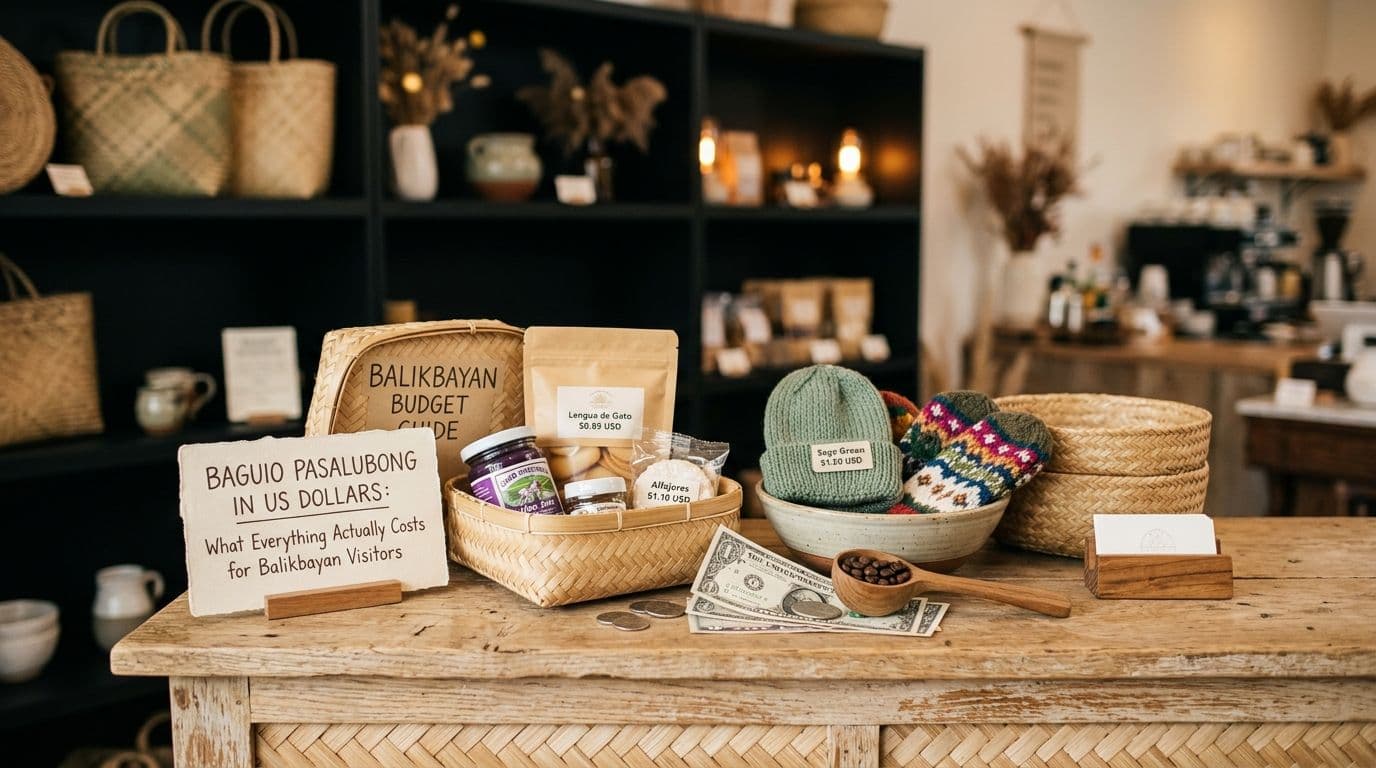
A dollar-based price guide to Baguio pasalubong for balikbayans, with what's worth buying and what's just tourist markup.
Every time I fly back to visit family, someone in the extended clan asks me to bring back "a little something from Baguio" as if that's a small request. It never is. Pasalubong shopping for balikbayans is its own category of stress, partly because you're doing math in two currencies while jet-lagged, and partly because prices for the same jar of ube jam can differ by 40 percent depending on which stall you walk into.
This post exists because I kept getting the same question from relatives and guests staying at JMG Nest, our place in La Trinidad: "How much should I actually budget in dollars?" So here it is, with real peso prices converted to USD, plus honest notes on what's worth the money and what's just markup aimed at people who look like they're leaving the country soon.
This extends a companion piece we already have with full peso pricing, the Baguio Pasalubong Price List 2026. If you want the peso baseline first, start there. This post is specifically for people budgeting from a US bank account.
A quick caveat before the numbers
Prices here were checked in early 2026, converting at roughly 58 PHP to 1 USD. That rate moves. Sometimes it's 55, sometimes it creeps toward 59 or 60. A few pesos of difference per dollar doesn't matter much on a 150 peso item, but it adds up once you're buying pasalubong for fifteen people back home.
Also, and this is the part people forget: peso prices themselves aren't fixed. Vendors at Session Road or the public market adjust based on season, foot traffic, and sometimes just how you're dressed. A balikbayan with a US accent and a rolling suitcase gets quoted differently than a local buying the same jar of jam. This isn't unique to Baguio, but it's worth knowing going in.
How much does Baguio pasalubong cost in US dollars?
Here's the breakdown for the items people actually buy in bulk, not the novelty stuff. These are converted from typical peso prices you'd encounter at legitimate vendors, not the inflated tourist-trap versions.
Individually, none of this looks expensive in dollars. That's the trap. A $3 jar of ube jam feels like nothing until you're buying twelve of them for twelve different households, plus peanut brittle, plus coffee, plus whatever your titas specifically requested. Budget in bulk, not per item.
What does ube jam cost in USD?
Ube jam gets its own section because it's the single most requested pasalubong item, and it's also where price confusion runs highest. The small jar from Good Shepherd Convent runs about $2.60 to $3.10 depending on the day and the queue length, oddly enough. When the line is long, vendors selling nearby sometimes charge more for the same jar because people don't want to wait.
Here's something I tell relatives every time: the official Good Shepherd store has fixed pricing and it's actually one of the more honest transactions in the whole pasalubong economy. The markup happens with resellers outside the gate or at stalls claiming to be "the same recipe." Some of those are fine. Some aren't. If ube jam is the one item on your list that actually matters, buy it at the source even if it means standing in line.
For US-bound travelers, ube jam travels reasonably well if it's sealed and you're not over the liquid limit for carry-on. Checked luggage avoids that problem entirely. We go deeper on what survives the flight and what customs might flag in Baguio Pasalubong for Balikbayans: What Actually Travels to the US, which is worth reading before you buy in bulk.
Which Baguio pasalubong is worth it vs a tourist markup for balikbayans?
This is really the question underneath all the others. Not "what does it cost" but "am I being charged the balikbayan rate." Some honest answers:
Worth the money
- Ube jam from Good Shepherd directly. Fixed pricing, consistent quality, and it's genuinely a Baguio product, not something trucked in and relabeled.
- Strawberry jam bought near the farms in La Trinidad, not in Baguio proper. Prices drop noticeably once you're out of the city center, and freshness is better since you're closer to the source. If you're staying with us, the farms are a short walk from the property, which is one of the small conveniences of basing yourself in La Trinidad instead of Baguio City center.
- Benguet coffee beans. The higher price point is justified. This isn't the same as mass-market instant coffee.
- Peanut brittle from the public market. Cheap, reliable, and it doesn't spoil on a long flight.
Often overpriced for tourists
- Woven textiles sold on Session Road to foot traffic. Quality varies wildly and pricing has zero consistency. The same item can be marked up 50 percent higher than what you'd pay at the public market with a little haggling.
- Pre-packaged "pasalubong gift sets" sold at some souvenir shops near hotels. Convenient, but you're paying for the packaging and the convenience, not better ingredients.
- Sundot kulangot sold in tourist-heavy spots outside the market. Same product, higher price, just because of foot traffic location.
If you want the full walkthrough on where prices differ most dramatically by location, our post comparing market vs Mines View vs Session Road vs SM breaks this down spot by spot. Short version: the public market is almost always cheaper, but it requires some comfort with haggling, which we cover in the Baguio Public Market Pasalubong Guide.
Practical budgeting for balikbayans
When I was growing up here, pasalubong was almost an afterthought, something you grabbed on the way to the bus terminal. Now it's practically a line item in the trip budget, especially for balikbayans flying back with a list from every relative who heard you were visiting.
A reasonable rule of thumb: if you're buying pasalubong for 10 to 15 households, budget $80 to $120 total if you're sticking to the worthwhile items above and buying at the right locations. That number climbs fast if you're buying pre-packaged gift sets or shopping exclusively at tourist-facing stalls near hotels.
If you want the fuller peso-based breakdown with more items and categories, the full 2026 price list is the companion piece to this post. And if your list includes food beyond the jams and brittle, our food pasalubong deep dive covers longganisa, sundot kulangot, and other items in more detail, including what travels and what doesn't.
For those working with a tighter budget, or buying for a large number of people, the Best Baguio Pasalubong Under 500 pesos guide is useful for stretching a limited amount further without resorting to the pre-packaged gift sets.
Where to base yourself for pasalubong shopping
One thing balikbayans often don't realize until they're already there: staying in La Trinidad rather than central Baguio actually puts you closer to some of the better pasalubong sources, particularly the strawberry farms and the fresher produce stalls. It's a 15 minute drive into the city when you need Session Road or the public market, but you're not paying Baguio city center prices for lodging, and you get a quieter base to sort through everything you bought before packing it for the flight home.
If you're planning the logistics of a full trip, our La Trinidad travel guide covers the practical side, and if you have half a day free, the Bell Church is a quiet, easy stop nearby.
If you're figuring out where to stay while you sort through pasalubong lists and figure out what fits in your luggage, check availability at JMG Nest for your dates. It's a short walk to the strawberry farms and close enough to the city that pasalubong runs don't eat up your whole day.
Frequently Asked Questions
How much should you budget in dollars for Baguio pasalubong?
For a moderate list covering 10 to 15 households, expect to spend $80 to $120 if you're buying the worthwhile items at the right locations, like ube jam directly from Good Shepherd and strawberry jam near the farms in La Trinidad. That number can double or more if you're buying pre-packaged gift sets or shopping mostly at tourist-facing stalls in hotel areas.
Why do pasalubong prices vary so much for tourists?
Location is the biggest factor. The same item can cost 30 to 50 percent more at Session Road or near hotels compared to the public market or buying near the source, like strawberry jam bought close to the farms rather than in Baguio proper. Vendors also adjust pricing based on perceived buyer, and balikbayans with US accents or obvious tourist signals sometimes get quoted higher than locals for identical products.
You Might Also Like
History of Baguio City: How the Summer Capital Came to Be
How a mountain settlement became the Philippines' Summer Capital, told by someone who grew up in its fog and cold mornings, not a textbook.
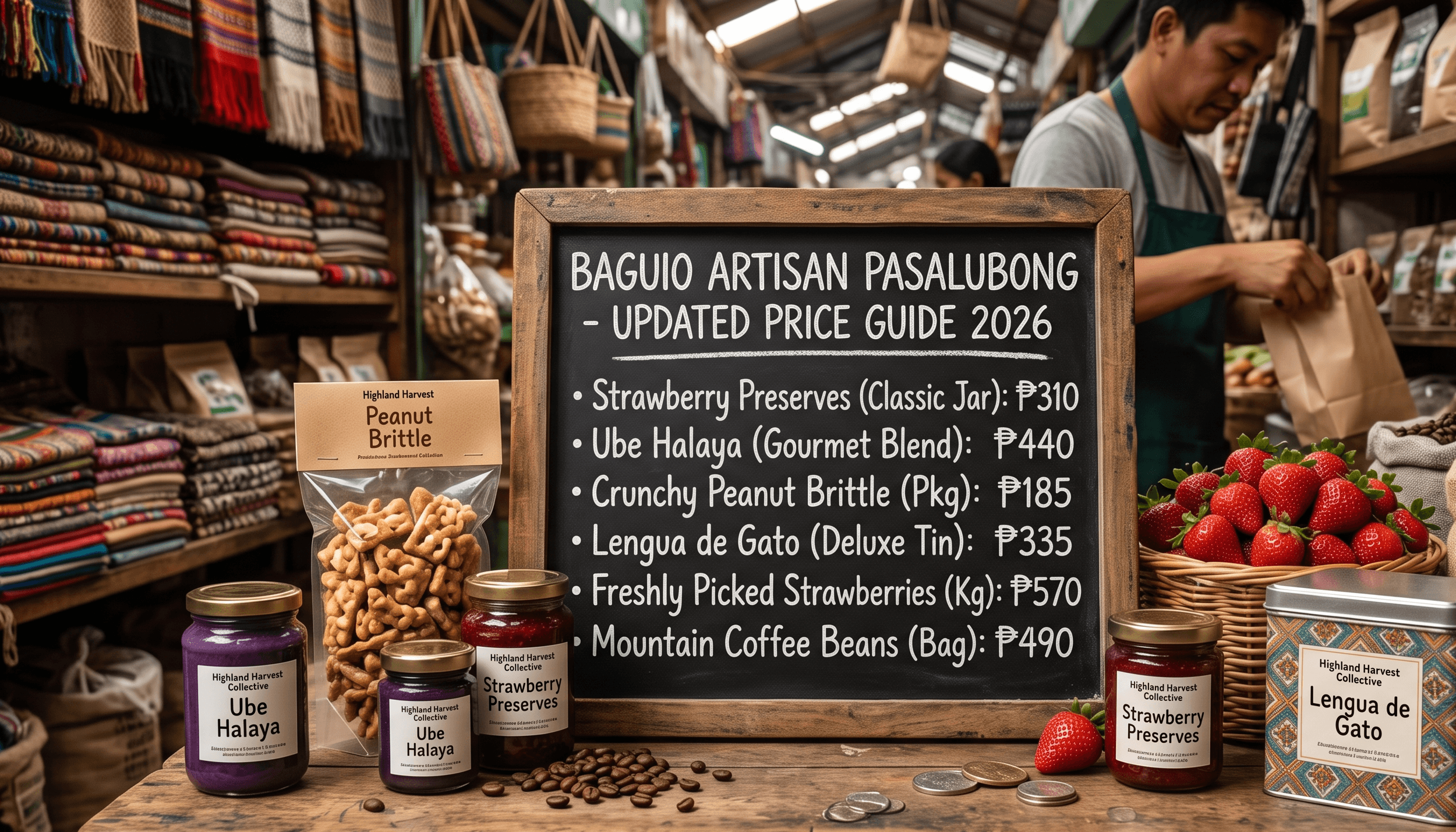
Baguio Pasalubong Price List 2026: What Everything Actually Costs
A real, checked Baguio pasalubong price list for 2026, with Good Shepherd prices and honest notes on what's actually worth buying.
Baguio Delicacies: What's Actually Worth Trying (2026 Guide)
Not every Baguio delicacy deserves suitcase space. Here's a native's honest ranking of what's worth trying, what's worth buying, and what to skip.