La Trinidad Benguet Travel Guide: The Complete Day Trip from Baguio (2026)
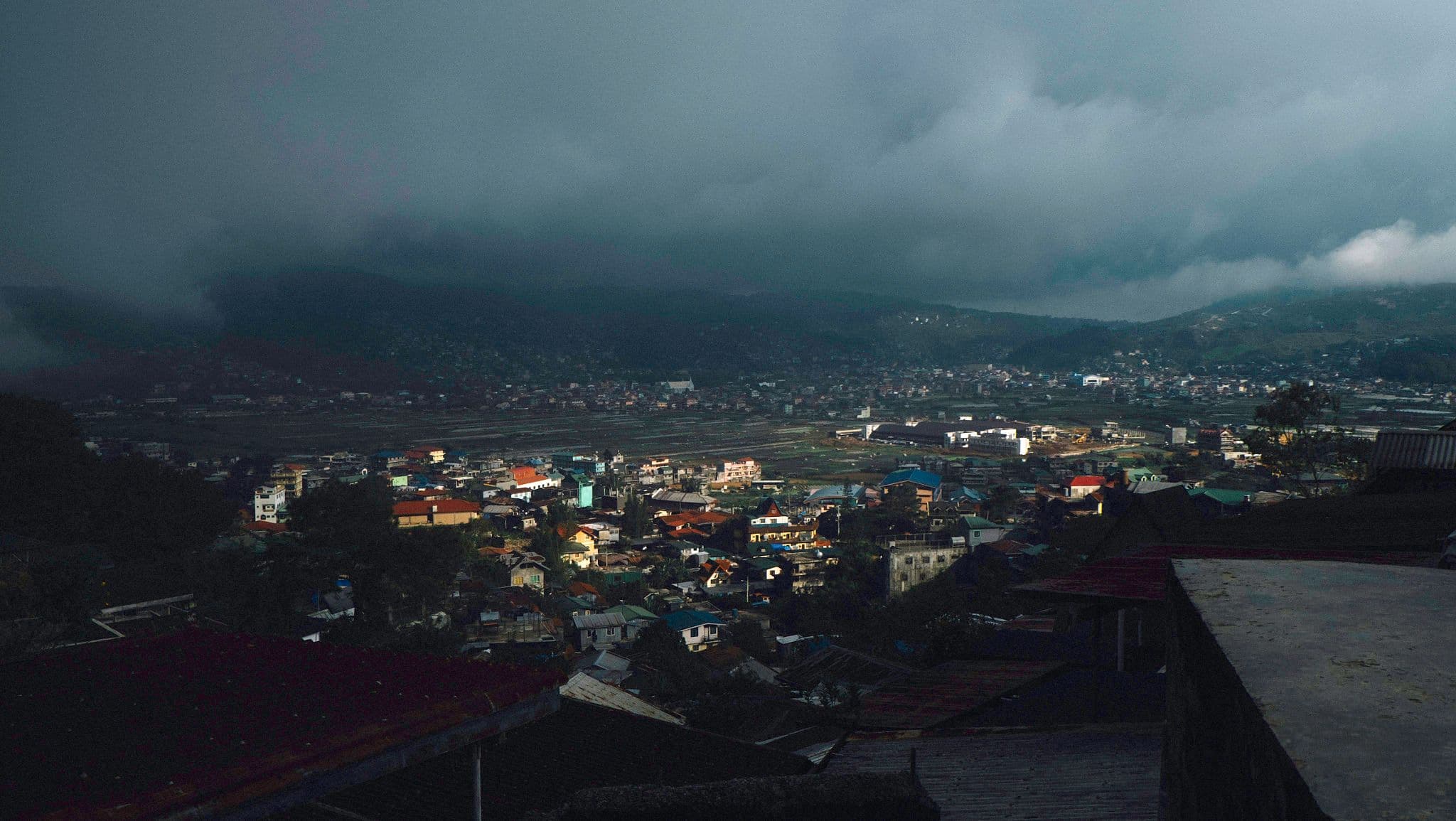
La Trinidad isn't just a strawberry farm pit stop. The capital of Benguet offers mountain views, trading posts, and adventures that deserve more than two hours.
Growing up in Baguio, La Trinidad was that place we'd drive through on the way to somewhere else — or where we'd make a quick detour for strawberries when relatives visited. I never thought much about it beyond the red berries and the traffic getting back to the city. It wasn't until I started coming back as an adult, staying at JMG Nest in the valley, that I realized how much I'd been missing all those years.
La Trinidad isn't just Baguio's strawberry farm suburb. It's the capital of Benguet province, a valley town with its own character, mountain adventures, and reasons to visit that have nothing to do with fruit picking. Located just 6 kilometers from Baguio City center, it deserves more than the two-hour detour most travelers give it.
This complete La Trinidad travel guide covers everything you need to know: what makes this place special beyond the strawberries, how to get there, what to do, where to stay, and why it's worth planning a full day — or even basing your entire Benguet trip here.
What Is La Trinidad, Really?
Before we dive into the tourist spots, let's get the basics straight. La Trinidad is the capital municipality of Benguet province — not just a neighborhood of Baguio. With a population of around 137,000, it's actually larger than Baguio City itself. The town sits in a valley surrounded by mountains, about 1,400 meters above sea level.
The name comes from the Spanish colonial period, referring to the Holy Trinity. But long before Spanish influence, this valley was home to Ibaloi communities who recognized its agricultural potential. Today, it's still known as the "Strawberry Fields of the Philippines" and the "Salad Bowl of the Philippines" for its vegetable production.
What many visitors don't realize is that La Trinidad has been quietly developing its own tourism infrastructure. The Strawberry Festival every March draws thousands, but there are hiking trails, viewpoints, and cultural sites that deserve attention year-round.
La Trinidad vs. Baguio: What's the Difference?
If you're planning your first trip to the region, understanding the relationship between La Trinidad and Baguio helps. Baguio is the larger, more famous city — the summer capital with Session Road, Burnham Park, and the main tourist infrastructure. La Trinidad is quieter, more agricultural, with better access to hiking trails and mountain adventures.
Many travelers now use La Trinidad as their base for exploring both destinations. You get easier access to mountains and farms, less traffic, and often better accommodation value. From La Trinidad, you can reach Baguio City center in 15-20 minutes by car, or explore the broader Benguet province without fighting city traffic.
Top Things to Do in La Trinidad
Here's the complete list of La Trinidad attractions, from the famous strawberry farms to hidden gems most tourists never find.
1. Strawberry Farm Experience
Let's start with the obvious one. Strawberry picking in La Trinidad remains the most popular activity, and for good reason. The farms here produce some of the sweetest strawberries in the Philippines, available for picking year-round with peak season from November to April.
The main strawberry farming area stretches along the Baguio-La Trinidad highway. Most farms charge ₱200-300 for a container you can fill yourself, plus you can buy pre-picked strawberries, strawberry jam, strawberry wine, and other products.
Pro tip from someone who's been doing this since childhood: go early morning (7-9 AM) for the best berries and cooler weather. The plants are more hydrated, the fruit is firmer, and you'll avoid the crowds.
2. Mount Kalugong Rock Formation
This is where La Trinidad gets interesting beyond agriculture. Mount Kalugong offers one of the best viewpoints in the entire Cordillera region, with 360-degree views of the La Trinidad valley, Baguio City, and the surrounding mountains.
The rock formations at the summit are Instagram-worthy, but the real magic is the panoramic view. On clear days, you can see all the way to the South China Sea. The hike takes about 30-45 minutes from the jump-off point in Barangay Tuel.
Entry fee is around ₱30, and the trail is well-maintained. Bring water and wear proper hiking shoes — the last section involves some rock scrambling.
3. Mount Costa (Cloud 9)
Less crowded than Mount Kalugong but equally spectacular, Mount Costa offers sunrise and sunset viewing opportunities that rival anything in Baguio proper. The summit has a small viewing deck and, on clear mornings, you're literally above the clouds.
The hike is steeper than Kalugong — about 45 minutes to an hour — but manageable for most fitness levels. Local guides are available for hire if you're not confident navigating the trail.
Best time to visit is early morning for sunrise, or late afternoon for sunset. The golden hour light hitting the valley below is something you won't forget.
4. La Trinidad Vegetable Trading Post
This might sound boring if you're not into vegetables, but hear me out. The La Trinidad trading post is where restaurants and markets from across Luzon come to buy produce. It's the largest vegetable trading center in the Philippines, and watching it operate is fascinating.
The real attraction is the incredibly fresh, incredibly cheap vegetables. We're talking lettuce heads for ₱20, perfect tomatoes for ₱40 per kilo, vegetables you can't find in Manila supermarkets. If you're staying somewhere with kitchen access, this is vegetable paradise.
The trading post is most active early morning (5-8 AM) when the wholesale action happens. Come with a bag and cash — credit cards aren't accepted.
5. Benguet State University
BSU's La Trinidad campus is worth a visit for its agricultural programs and beautiful campus setting. The university runs demonstration farms where you can see advanced growing techniques for strawberries, lettuce, and other cool-weather crops.
They also have a small museum showcasing Ibaloi culture and the agricultural history of the region. The campus itself is built into the hillside with nice walking paths and mountain views.
Visitors are welcome, but call ahead to arrange a proper tour. The students and faculty are proud of their programs and happy to show visitors around.
6. Our Lady of Lourdes Parish (Bell Church)
The Bell Church got its nickname from the large bell visible from the highway, but it's worth a stop for the architecture and peaceful atmosphere. Built in the 1950s, it represents the blending of Spanish colonial church design with local materials and craftsmanship.
The church sits on elevated ground with views over the valley. Even if you're not religious, it's a quiet spot for reflection and some good photos of the surrounding landscape.
7. StoBoSa Tourist Attraction
StoBoSa (Strawberry, Bottle gourd, and Sayote) is a newer attraction featuring colorful houses designed to look like these three crops. It's Instagram-bait, sure, but well-executed Instagram-bait.
The houses are functional — you can go inside for photos, and there's a small café serving local dishes. Entry fee is minimal (around ₱20), and it takes about 30 minutes to see everything and take your photos.
Best light for photos is mid-morning or late afternoon. The colorful houses pop against the green valley background.
How to Get to La Trinidad from Baguio
La Trinidad is incredibly accessible from Baguio City, with multiple transportation options depending on your budget and comfort preferences.
By Private Vehicle
If you have your own car or rental, La Trinidad is a 15-20 minute drive from downtown Baguio via the Baguio-La Trinidad-Itogon road. The route is well-paved and clearly marked. Traffic can be heavy during peak hours (7-9 AM, 4-6 PM) and weekends.
Parking is available at most attractions, though strawberry farm parking can get crowded during peak season. Expect to pay ₱20-50 for parking at most sites.
By Jeepney
Jeepneys run regularly between Baguio City proper and La Trinidad throughout the day. Catch them at the Baguio public market area — look for jeepneys with "La Trinidad" or "Km. 5" on the destination sign.
Fare is around ₱15-20, and the ride takes 25-30 minutes depending on traffic. Jeepneys run frequently from early morning until around 8 PM.
By Taxi or Habal-Habal
Taxis from Baguio to La Trinidad cost ₱150-250 depending on your exact destination and traffic conditions. For attractions like Mount Kalugong that require going off the main highway, habal-habal (motorcycle taxis) are available for ₱50-100 from the main road.
La Trinidad Travel Itineraries
How long should you spend in La Trinidad? It depends on what you want to do, but here are some suggested itineraries.
Half-Day La Trinidad (4-5 Hours)
Morning (8:00-12:00):
- Start with strawberry farm picking (1.5 hours)
- Visit StoBoSa for photos (30 minutes)
- Quick stop at the trading post if it's market day (30 minutes)
- Drive/ride to Mount Kalugong for the viewpoint (1.5 hours including hike)
This gives you the highlights without feeling rushed, perfect if you're staying in Baguio and want to add La Trinidad to a day of city sightseeing.
Full Day La Trinidad (8-10 Hours)
Early Morning (6:00-9:00):
- Sunrise at Mount Costa or early strawberry picking
- Breakfast at a local eatery
Morning (9:00-12:00):
- Mount Kalugong hike and viewpoint
- Visit Bell Church
Afternoon (12:00-16:00):
- Lunch in town
- BSU campus tour
- StoBoSa photos
- Trading post exploration
Late Afternoon (16:00-18:00):
- Sunset viewing or second strawberry farm visit
- Shopping for strawberry products and vegetables
This schedule lets you experience La Trinidad's agricultural, natural, and cultural sides without rushing.
Multi-Day Base in La Trinidad
More travelers are discovering the advantages of staying in La Trinidad rather than Baguio City. You get easy access to both destinations, better mountain views, and often more authentic local experiences.
Day 1:Focus on La Trinidad itself — strawberry farms, local mountains, trading post, cultural sites.
Day 2:Day trip to Baguio City for the main tourist sites —Session Road, Burnham Park, and the top Baguio attractions.
Day 3:Explore the broader Benguet region — Itogon, Tuba, or other mountain towns accessible from La Trinidad.
This approach gives you the best of all worlds: mountain adventures, city attractions, and cultural immersion.
Where to Stay in La Trinidad
Accommodation options in La Trinidad have improved dramatically in recent years. You can now find everything from budget guesthouses to premium vacation rentals.
Why Stay in La Trinidad vs. Baguio City
Staying in La Trinidad offers several advantages:
- Better mountain access:Hiking trails and viewpoints are minutes away, not hours.
- Less crowded:Especially on weekends when Baguio City is packed with day-trippers.
- Authentic local experience:You're staying in a working agricultural community, not a tourist zone.
- Better value:Accommodation and dining are generally cheaper than Baguio City proper.
- Easy Baguio access:Still only 15-20 minutes to reach city attractions when you want them.
The main tradeoff is nightlife and dining variety — La Trinidad is quieter in the evenings, with fewer restaurant and entertainment options than Baguio City.
Recommended Accommodation
For travelers who want the full La Trinidad experience with modern comfort, I'd recommend staying at a vacation rental that captures the valley's charm while providing reliable amenities. You want mountain views, easy access to the strawberry farms and hiking trails, but also the comfort and privacy that makes a vacation truly restful.
The ideal location is close enough to walk to the strawberry farms (within 3-4 kilometers) but elevated enough for proper mountain views and cooler temperatures.
La Trinidad Travel Budget Guide
La Trinidad is generally more budget-friendly than Baguio City, though costs can vary significantly based on your travel style and the season.
Daily Budget Breakdown
Budget Travel (₱1,500-2,500 per day):
- Accommodation: ₱800-1,200 (guesthouse or budget hotel)
- Meals: ₱400-600 (local eateries, cooking some meals)
- Transportation: ₱100-200 (jeepneys, walking)
- Activities: ₱200-500 (strawberry picking, mountain hikes)
Mid-Range Travel (₱3,000-5,000 per day):
- Accommodation: ₱2,000-3,000 (nice hotel or vacation rental)
- Meals: ₱800-1,200 (mix of local and nicer restaurants)
- Transportation: ₱300-500 (taxis, habal-habal for mountain access)
- Activities: ₱500-800 (guided tours, multiple attractions)
- Shopping: ₱400-500 (strawberry products, vegetables)
Luxury Travel (₱6,000+ per day):
- Accommodation: ₱4,000+ (premium vacation rental or resort)
- Meals: ₱1,500+ (higher-end restaurants, room service)
- Transportation: ₱800+ (private vehicle with driver)
- Activities: ₱1,000+ (private guides, exclusive experiences)
- Shopping: ₱800+ (premium local products, souvenirs)
Money-Saving Tips
The vegetable trading post offers incredible value if you're cooking any meals. A week's worth of fresh vegetables costs what you'd pay for one restaurant salad in Manila.
Many hiking trails and viewpoints have minimal or no entrance fees — Mount Kalugong charges only ₱30, and the views rival paid attractions elsewhere.
Strawberry farm prices are negotiable if you're buying in quantity. Ask about bulk rates for jam, wine, and other products.
Jeepney transportation is incredibly cheap — you can get around the entire area for under ₱100 per day in transportation costs.
Best Time to Visit La Trinidad
La Trinidad has a pleasant climate year-round, but different seasons offer different experiences.
Peak Season (November-February)
This is strawberry peak season, with the largest, sweetest berries available. Weather is coolest and driest, perfect for hiking and outdoor activities. Expect crowds, especially on weekends, and higher accommodation prices.
Temperature ranges from 15-25°C, with minimal rainfall. This is ideal weather for mountain activities and photography.
Shoulder Season (March-May, September-October)
Still good weather with fewer crowds. Strawberries are available but not at peak size. This is perfect for travelers who want to experience La Trinidad without fighting for parking at the strawberry farms.
March features the Strawberry Festival — a month-long celebration with cultural shows, agricultural exhibits, and food festivals.
Rainy Season (June-August)
Fewer tourists mean better deals on accommodation and a more authentic local experience. The landscape is lush and green, perfect for photography. However, hiking trails can be muddy and viewpoints may be obscured by clouds.
This is actually a great time to focus on indoor cultural activities, local markets, and culinary experiences.
Getting Around La Trinidad
La Trinidad is compact enough to explore on foot for the main attractions, but you'll want transportation for the mountain hikes and outlying areas.
Walking
The main strawberry farming area, StoBoSa, and town center are walkable if you're staying centrally. However, the mountain attractions require transportation to the trailheads.
Tricycle and Habal-Habal
For short distances and mountain trailhead access, tricycles charge ₱50-100 for most trips within La Trinidad. Habal-habal (motorcycle taxis) are essential for reaching Mount Kalugong and Mount Costa — they'll take you right to the trail entrance for ₱50-80.
Jeepney
Jeepneys connect La Trinidad to Baguio City and run routes within the municipality. They're the cheapest option but not always convenient for tourist attractions off the main highways.
Private Vehicle
Having your own transportation gives you the most flexibility, especially for early morning sunrise hikes or sunset viewpoint visits. Car rental is available in Baguio City for around ₱2,500-3,500 per day.
La Trinidad Food Scene
La Trinidad's food scene centers around incredibly fresh ingredients from the surrounding farms. You won't find the restaurant variety of Baguio City, but what you will find is authentic, ingredient-driven cooking.
Must-Try Local Specialties
Fresh Strawberries and Strawberry Products:Obviously. But beyond the fresh fruit, try the strawberry wine, strawberry jam made with less sugar than commercial versions, and strawberry shortcake from local bakeries.
Fresh Vegetable Dishes:Restaurants here serve vegetables picked that morning. The lettuce salads, fresh tomato dishes, and vegetable stir-fries taste completely different from what you get in Manila.
Highland Rice:Benguet produces a distinct variety of rice grown at high altitude. It has a nuttier flavor and firmer texture than lowland rice.
Ibaloi Dishes:Some local eateries serve traditional Ibaloi food including pinikpikan (a chicken soup), binungor (bamboo-cooked rice), and various dishes using native herbs and vegetables.
Recommended Eating Spots
Most dining in La Trinidad happens at small local eateries rather than fancy restaurants. Ask locals for their current favorites — small places open and close frequently, and the best ones are often the newest.
The trading post area has several carinderias serving simple, fresh meals to farmers and traders. These aren't tourist restaurants, but if you want authentic local food at local prices, they're worth seeking out.
Planning Your La Trinidad Trip
If you're convinced that La Trinidad deserves more than a strawberry farm drive-by, here's how to plan your visit properly.
Before You Go
Check weather conditions, especially if you're planning mountain hikes. Mount Kalugong and Mount Costa can be fogged in during rainy season, making the viewpoints worthless.
If you're driving, verify that your vehicle can handle the mountain roads to the trailheads. Most are paved, but steep and narrow.
Book accommodation in advance during peak season (November-February) and especially during the March Strawberry Festival.
What to Pack
Layered clothing for temperature changes throughout the day. Early morning mountain hikes can be cold (15°C), while afternoon valley activities can be warm (25°C).
Proper hiking shoes for mountain trails. The trails are generally well-maintained, but you'll encounter loose rocks and steep sections.
Camera with extra batteries — the mountain viewpoints offer some of the best photography opportunities in the Philippines.
Cash in small bills. Many local attractions, eateries, and transportation options don't accept cards or large bills.
Connecting with Broader Philippines Travel
La Trinidad works well as part of a broader Northern Luzon itinerary. Many travelers combine it with Sagada, Vigan, or other Cordillera destinations. Getting to the region from Manila is straightforward, and La Trinidad makes an excellent first stop before heading to more remote mountain destinations.
You can also easily combine La Trinidad with a broader Baguio area trip. A three-day Baguio itinerary could include a full day in La Trinidad, giving you the best of both destinations.
If you're planning an extended stay to really explore the region, staying in La Trinidad and taking day trips to Baguio, other Benguet towns, and even Sagada makes logistical and financial sense. You avoid the crowds and high prices of staying in Baguio City while maintaining easy access to everything the Cordilleras offer.
Ready to experience La Trinidad beyond the strawberry farms? Book your stay in the heart of La Trinidad valley and discover what this mountain town has been quietly offering all along. From here, you're walking distance to the farms, minutes from the mountain viewpoints, and perfectly positioned to explore both La Trinidad's hidden gems and Baguio's famous attractions.
Frequently Asked Questions
How long should I spend in La Trinidad?
A full day allows you to experience the main attractions without rushing — strawberry farms, one mountain hike, and local sites. However, staying 2-3 days lets you properly explore the hiking trails, experience local culture, and use La Trinidad as a base for exploring the broader Benguet region.
Is La Trinidad worth visiting if I'm not interested in strawberry picking?
Absolutely. The mountain viewpoints (Mount Kalugong and Mount Costa) offer some of the best panoramic views in the Cordilleras. The vegetable trading post, cultural sites, and hiking opportunities make it worthwhile even if you skip the strawberry farms entirely.
Can I visit La Trinidad on a day trip from Baguio?
Yes, La Trinidad is only 15-20 minutes from Baguio City center, making it perfect for a day trip. However, staying overnight in La Trinidad gives you better access to sunrise/sunset viewpoints and a more relaxed experience of the local culture.
What's the best way to get around La Trinidad without a car?
Jeepneys connect to Baguio and run local routes, while tricycles and habal-habal provide access to mountain trailheads and outlying attractions. Most visitors find a combination of walking for central attractions and hiring habal-habal for mountain access works well and stays budget-friendly.
You Might Also Like

Best Time to Visit the Philippines: Month-by-Month & Region Guide
The honest, month-by-month breakdown of when to visit the Philippines, written by someone who actually grew up in the mountains here, not a travel agency.
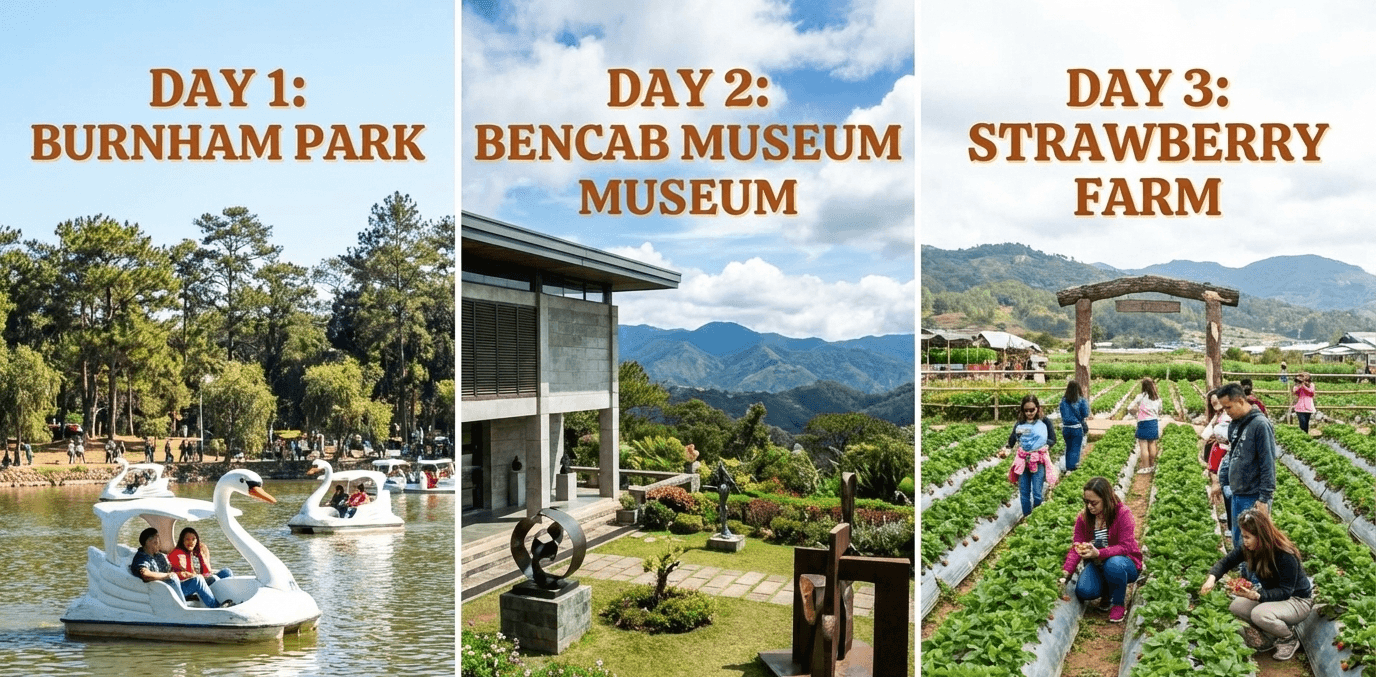
Baguio 3-Day Itinerary: Complete Guide for First-Timers
Perfect 3-day Baguio itinerary covering top attractions, local food, and hidden gems. Day-by-day guide with transportation tips and budget breakdown.
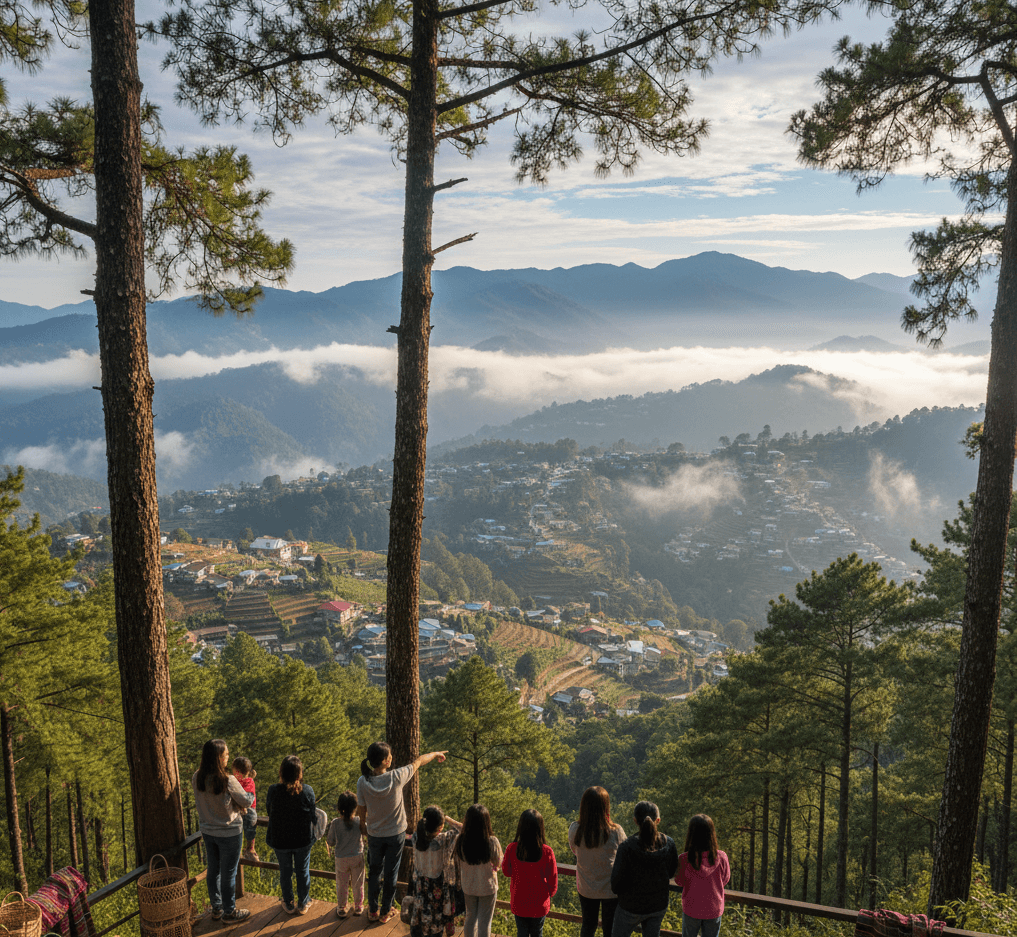
Best Time to Visit Baguio: Weather, Crowds & Seasons Guide
Discover the best time to visit Baguio City based on weather, crowds, and festivals. Month-by-month guide to plan your perfect mountain getaway.