Baguio Delicacies: What's Actually Worth Trying (2026 Guide)
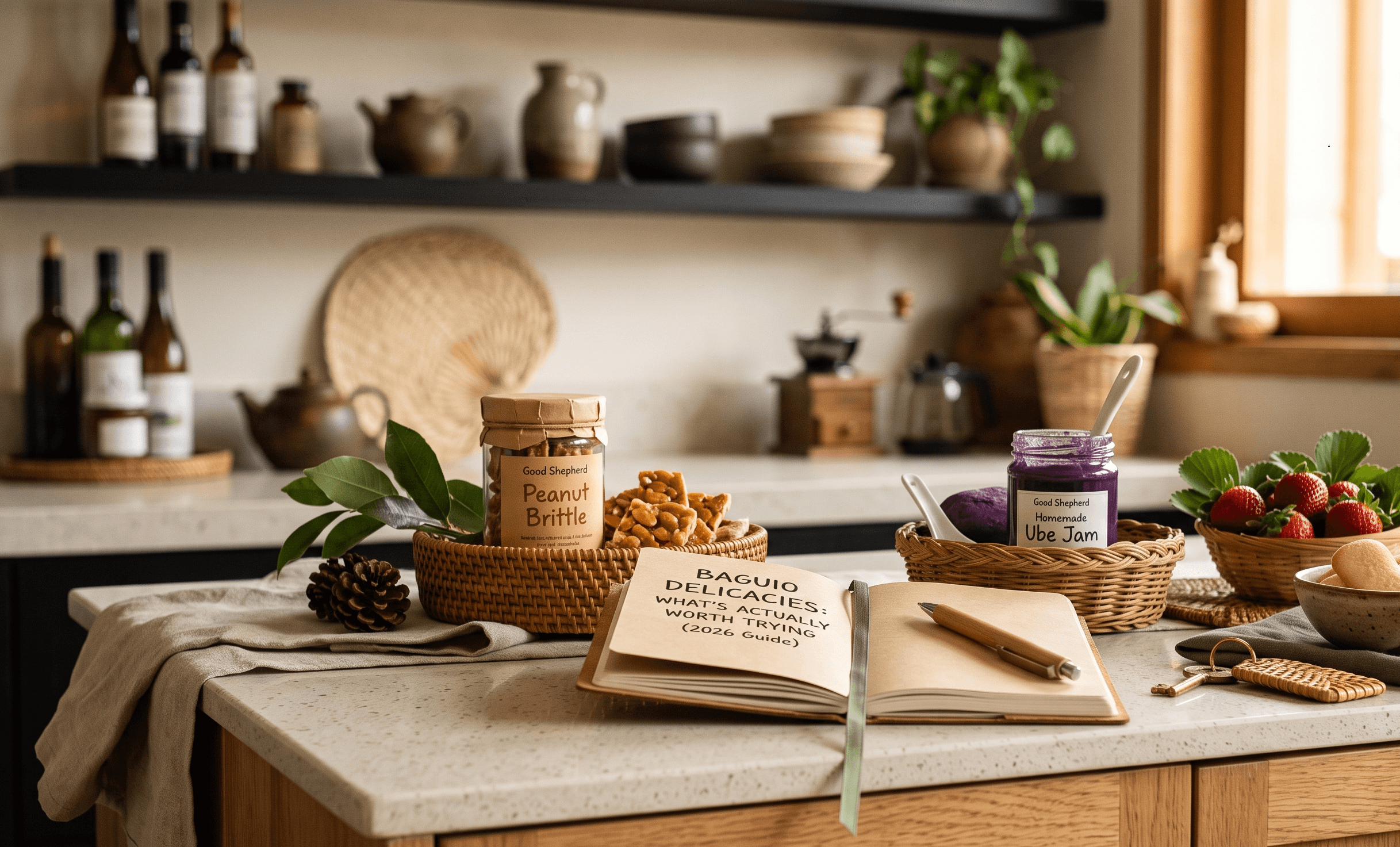
A native Baguio perspective on which delicacies deserve a spot in your pasalubong bag, which are overhyped, and which you should skip entirely.
Every time I fly back to Baguio, someone in the family asks the same question before I've even unpacked: what are you bringing home this time. And every time, I have to talk someone out of buying the wrong thing at the wrong stall because it looked good in a Facebook reel. So let's settle this properly. There are dozens of things sold as Baguio delicacies these days, but not all of them deserve a spot in your bag or your budget.
This guide is not a list of everything you can buy near Session Road. It's a verdict. I'm telling you what's actually worth trying, what's riding on reputation alone, and what I'd skip even if my own titas insist on buying it every single year. If you're staying at JMG Nest in La Trinidad, you're already a few minutes from some of the best strawberry-based pasalubong in the province, so I'll flag those too.
If you want the full breakdown of the pasalubong scene, from where to shop to what fits a tight budget, check our Best Baguio Pasalubong Under ₱500 guide and the deeper Food Pasalubong Deep Dive. This post is specifically about the food itself, ranked by whether it's actually worth your suitcase space.
The Verdict, Upfront
If you only remember one thing from this post, remember this order. Strawberry jam from La Trinidad and ube jam from the public market are the two I'd never skip. Peanut brittle (peanut kisses) and choco flakes are worth it but only from specific makers. Sundried mangoes and dried strawberries are fine but overpriced compared to what you'd pay elsewhere. Vegetable pastries and fresh strawberry taho are underrated and rarely make anyone's list, which is exactly why I'm putting them here. And the smoked etag or itag you see sold as a novelty at some tourist stalls is the one I'd actively tell you to skip.
Worth The Hype
1. Strawberry Jam (La Trinidad, Not Baguio Market)
This is non-negotiable. When people say Baguio delicacies, strawberry jam is usually the first thing that comes to mind, and for once the hype is earned, as long as you buy it from the actual source. La Trinidad is the strawberry capital, not Baguio City, and the jam sold at the farm stalls here uses real fruit with less corn syrup padding than what gets exported to the city market stalls. Since JMG Nest sits right in La Trinidad Valley, this is genuinely a five to ten minute walk from where you're staying. I grew up watching my aunt boil down strawberries in a battered aluminum pot on her stove, and the good commercial jams still taste closer to that than you'd expect.
Verdict: Buy here, not in the city. You'll pay less and get a fresher batch since it hasn't traveled far.
2. Ube Jam
Ube jam gets overshadowed by strawberry because strawberry has the better marketing, but a well-made batch, thick, purple, slightly sticky, and not over-sweetened, is one of the more underrated exports from this region. Look for small-batch sellers at the public market rather than the pre-packaged supermarket versions, which tend to use ube flavoring instead of the real tuber.
Verdict: Worth it, but check the ingredient list before buying. If ube isn't in the first two ingredients, put it back.
3. Peanut Brittle (Peanut Kisses)
Peanut kisses have been a Baguio staple since before I left for the U.S., and they've held up. The good ones snap cleanly and taste like actual roasted peanuts, not just sugar with peanut dust. The bad ones are stale, overly hard, and clearly mass-produced weeks ago. This is one where brand matters more than location. Ask your host or a local which brand they buy for their own family. That question alone will filter out ninety percent of the tourist-trap versions.
4. Choco Flakes
This one surprises people. Choco flakes, thin, crunchy chocolate wafer strips, are a genuinely underrated Baguio item that doesn't get the same social media attention as strawberry taho or ube ice cream. They travel well, don't melt, and last weeks without refrigeration, which makes them one of the most practical pasalubong choices for anyone flying internationally.
Overrated, But Still Fine
5. Sundried Mangoes and Dried Strawberries
These show up in every single souvenir shop from Session Road to Mines View, and they're fine, not bad, just overpriced for what they are. You're often paying a premium simply because the packaging says Baguio on it, when the actual fruit may not even be sourced locally. If you want dried fruit, buy it, but don't expect it to be dramatically better than what you'd find in Manila specialty stores.
6. Strawberry-Flavored Everything Else
Strawberry ice cream, strawberry candies, strawberry-flavored polvoron. Once a product becomes a franchise hit, the market floods with weaker copies riding on the same flavor. Some are good. Many are artificially flavored and only taste like strawberry because of the packaging telling your brain to expect it. Taste before you commit to buying in bulk.
Skip This
Smoked Etag Sold as Tourist Novelty
Etag, salted and smoked pork traditionally preserved by Cordillera communities, is a real and culturally significant food. But the version sold in small vacuum-sealed packs at tourist-facing stalls near the city center is often a diluted, overpriced version made for the pasalubong market rather than the dish it's meant to be. It doesn't travel well, it has a strong smell that causes problems at airport security and in shared luggage, and the version most tourists get isn't representative of how it's actually prepared or eaten locally. If you're genuinely interested in etag, ask a local where the real thing is made, don't buy the version marketed at Session Road foot traffic.
Verdict: Skip unless you have a specific, trusted source. This is the one delicacy where the tourist version actively misrepresents the real thing.
The Comparison Table
What Locals Actually Buy for Their Own Families
One thing people who didn't grow up here often miss is that locals rarely buy the flashiest packaging. We ask around first. My mom still calls a specific stall owner in the La Trinidad market by name because she trusts that batch. If you have any local contact at all, even a homestay host or a driver, ask them where they'd buy for their own family. That single question will save you more money and disappointment than any blog post, including this one.
If you're staying at our place in La Trinidad, we're happy to point you toward the stalls we personally trust rather than the ones with the biggest signage. It's a small thing, but it's the difference between coming home with jam that tastes like an actual strawberry farm and jam that tastes like corn syrup with red dye.
Timing Your Pasalubong Run
Delicacies taste and sell differently depending on when you visit. Strawberry season affects jam quality and price, and crowd levels at the market shift depending on whether you're visiting during peak tourist months. Our Best Time to Visit Baguio guide covers this in more detail if you're still deciding on dates. And if you're figuring out logistics for the trip overall, our guide on where to stay in Baguio breaks down neighborhoods, though staying in La Trinidad puts you closest to the strawberry stalls covered here.
For coffee lovers rounding out a pasalubong haul with local beans, our Best Cafes in Baguio City post has recommendations on where to find beans worth bringing home too.
Book Your Stay Near the Source
If strawberry jam and fresh produce pasalubong are on your list, staying in La Trinidad rather than the city center just makes more sense logistically. You're minutes from the farms instead of relying entirely on repackaged goods sold in the city. You can check availability and book your stay at JMG Nest directly, and we're glad to point you toward the stalls we trust once you're here.
Frequently Asked Questions
What are the best Baguio delicacies to bring home?
Strawberry jam from La Trinidad and real ube jam are the two most consistently worth buying. Peanut kisses and choco flakes are close seconds, especially for bulk office pasalubong.
What Baguio native delicacies should I avoid buying?
Tourist-marketed smoked etag is the one to skip unless you have a trusted, specific source. It's overpriced, doesn't travel well, and isn't representative of the traditional dish.
Where is the best place to buy Baguio food pasalubong?
La Trinidad, specifically near the strawberry farms and public market, tends to have fresher and better-priced jam than stalls closer to the Baguio city center that mark up the same products.
Is dried mango a good Baguio pasalubong choice?
It's fine but overrated. It's widely available outside Baguio too, so it isn't a distinctive regional item the way strawberry or ube jam are.
You Might Also Like
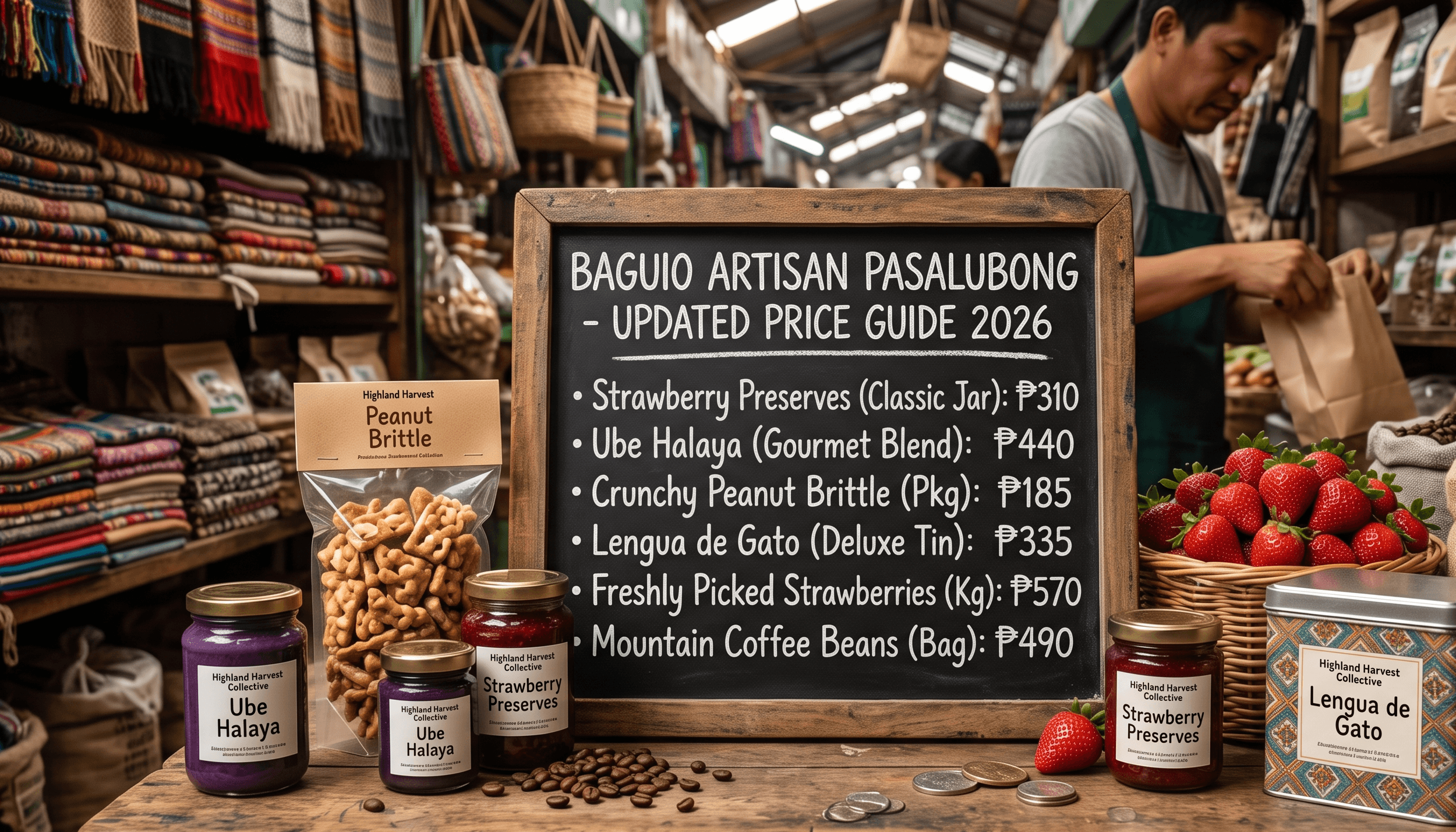
Baguio Pasalubong Price List 2026: What Everything Actually Costs
A real, checked Baguio pasalubong price list for 2026, with Good Shepherd prices and honest notes on what's actually worth buying.
Good Shepherd Convent Baguio: Is the Ube Jam Worth the Queue?
The complete guide to Good Shepherd Convent's famous ube jam. Is it worth the queue, what else to buy, and how to beat the crowds.
Best Baguio Pasalubong Under ₱500: Budget Souvenir Guide
Planning your Baguio pasalubong budget? This practical guide breaks down the best affordable souvenirs under ₱500, where to buy them cheapest, and how to stretch ₱2,000 for 10+ people.